Festival de Inverno 2009: A Visual Encore
The following year, we turned the volume up.
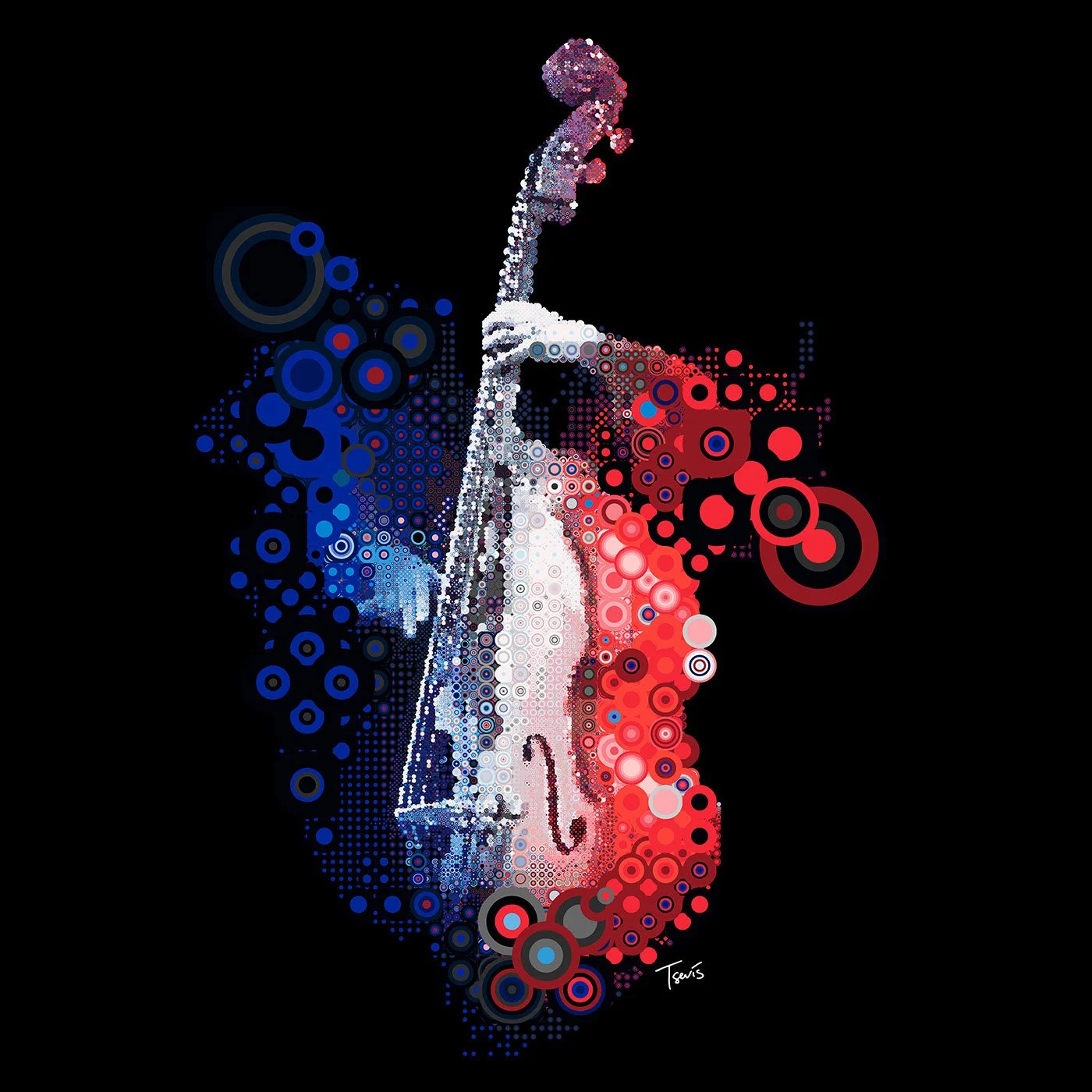
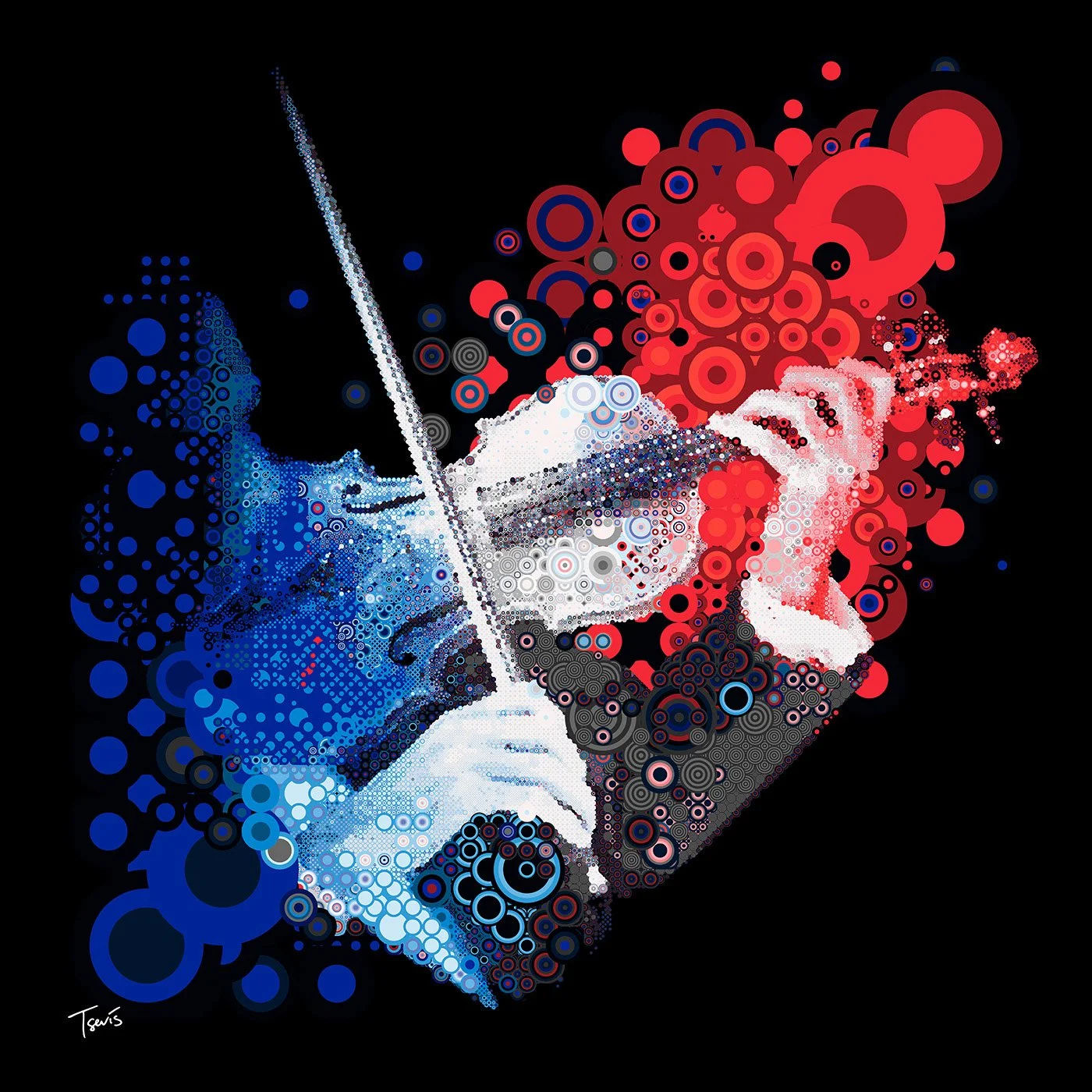
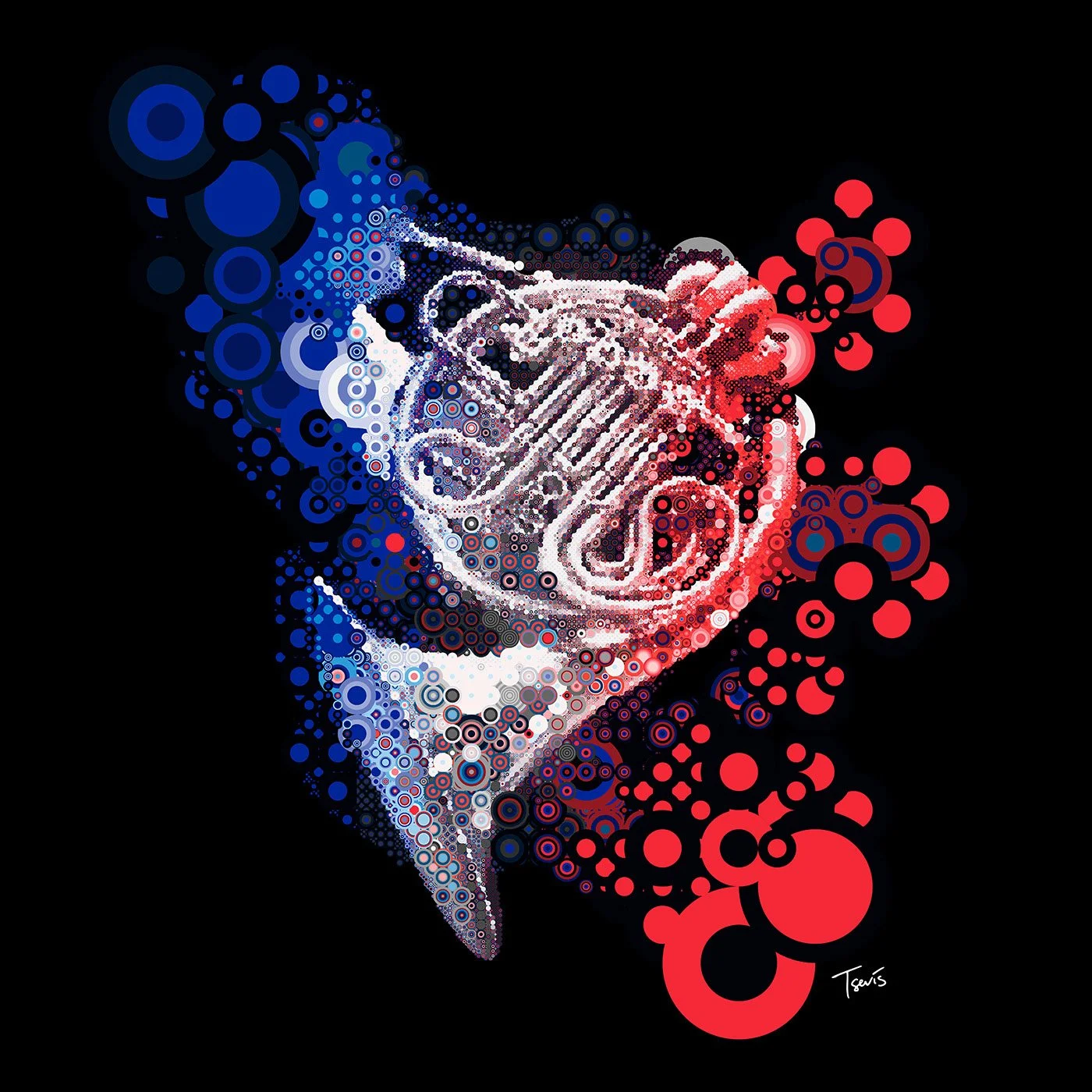
With the visual language now fully formed, the 2009 campaign offered room to improvise. The portraits grew bolder, more interpretive, more abstract, as we pushed deeper into cultural symbolism: the flowing lines of Niemeyer’s architecture, the syncopated rhythms of Bossa Nova, the tactile warmth of Brazilian ceramics, the layered grit of São Paulo’s cityscape.
That year, the festival honored France as its cultural guest, and so the entire campaign took on a distinctly tricolore tone. Bleu, blanc, rouge, not just as a flag, but as a mood. A palette of deep blues, powdered whites, and rich vermillions flowed through the mosaics, echoing the elegance of French visual tradition while staying rooted in the Brazilian soul of the project.
The technique itself matured. It became more deliberate, more nuanced, still bursting with energy, but now guided by a steadier hand. Like jazz inside a grid: intuitive, but engineered. This evolution didn’t go unnoticed; in 2009, the project was awarded a European Design Award (Bronze) for best corporate illustration in 2009.
But the true reward was watching the work take root in Brazil, in concert halls, subway stations, print campaigns, where people saw reflections of their culture through a kaleidoscopic, unexpected lens.
The Machine, the Muse: A Technical Interlude
None of this work would have been possible without Studio Artist, a groundbreaking visual synthesis tool created by Hawaiian developer and conceptual visionary Joe Dalton. Synthetik's founder was a principal of OSC, the first company to bring digital audio multi-tracking to the desktop computer with Deck. Deck was also the first audio software ever to combine audio, MIDI, and video. Deck literally provided the foundation code for ProTools and later Final Cut Pro. Pretty cool, right?
More than a software, Studio Artist was a generative partner. It allowed me to compose images the way a musician writes jazz: through adaptive iteration, algorithmic improvisation, and deep stylistic layering.
I was deeply inspired by Dalton’s “graphic synthesizer” philosophy, a radically different way of thinking about image-making. Rather than treating design as something built layer by layer, Studio Artist approached visuals as living systems, reactive, expressive, and constantly in flux. It offered a freedom I hadn’t found anywhere else.
But tools are only part of the story. The real magic often lies in the community around them, and for me, that included David Nagel, one of the unsung heroes of digital artistry. Through his invaluable column on CreativeMac.com (now sadly lost to time), David published hundreds of brilliant Photoshop add-ons and was, for a while, the go-to source for quality Studio Artist content outside the official channels. His tutorials, presets, and brushes, painstakingly developed and generously shared, became essential to my creative workflow during those early years. He helped shape an entire generation of experimental digital creators, myself included.
While his original work is difficult to find today, fragments of it live on through the efforts of artists and archivists who have tried to preserve his brushes and legacy online, a testament to the quiet but powerful influence he had on the digital arts movement.
Read more from Synthetik:
Photo Mosaic ART by Charis Tsevis | Charis Tsevis’ Digital Styling | Creating Photo Mosaic Effects with Studio Artist | Generating Adaptive Photo Mosaic Effects